
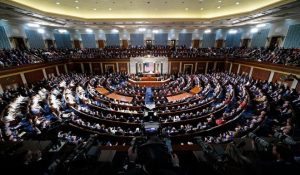
 During last night’s State of the Union Address, the conduct of Democratic members of Congress raised serious concerns about their readiness to lead and represent the full spectrum of the American people. The tone and demeanor displayed by many in attendance reflected not merely political disagreement, but what appeared to be a broader dismissal of viewpoints held by millions of citizens across the country.
In a functioning democratic republic, political disagreement is both expected and healthy. However, there is a meaningful distinction between principled opposition and behavior that conveys open contempt. For independent and centrist voters—many of whom value civility, institutional respect, and constructive debate—the events of the evening may reasonably prompt reflection about which political leaders demonstrate the temperament necessary for governance.
Leadership carries with it an obligation to uphold decorum, particularly in formal settings of national importance. The State of the Union Address is not simply a political event; it is a constitutional tradition intended to unify the nation, provide transparency, and foster accountability. When elected officials appear to prioritize partisan hostility over institutional respect, it risks undermining public confidence in government itself.
It is no secret that strong political disagreements exist between Democrats and President Trump. Such divisions are inherent in a competitive political system. However, when expressions of opposition appear to extend beyond policy disagreements and into broader displays that seem dismissive of the citizens who support opposing viewpoints, it can deepen political divisions and further erode national cohesion.
Additionally, many Americans remain concerned about broader issues related to election integrity, immigration policy, and the balance between enforcing national laws and accommodating humanitarian considerations. These concerns are legitimate subjects of public debate and deserve thoughtful, transparent, and lawful solutions. When political leaders appear more focused on partisan confrontation than on addressing these substantive issues, voters may reasonably question their priorities.
There is also a growing perception among many voters that the Democratic Party, once seen as a broad coalition representing diverse working-class interests, has increasingly aligned itself with ideological positions that feel disconnected from the everyday concerns of many Americans. Whether this perception is fully accurate or not, it is politically consequential, as trust in leadership depends heavily on whether citizens feel seen, heard, and respected.
Democratic leaders frequently emphasize principles such as democracy, constitutional governance, and inclusion. These are foundational American values that deserve genuine and consistent reinforcement. However, public confidence depends not only on rhetoric, but on conduct. Voters evaluate leaders not just by their stated principles, but by whether their actions reflect a commitment to respectful engagement, institutional integrity, and service to all citizens—not only those who share their political views.
Ultimately, elections serve as the mechanism through which citizens evaluate leadership, accountability, and vision for the nation’s future. Moments such as the State of the Union provide voters with an opportunity to assess not only policy positions, but also temperament, professionalism, and respect for democratic institutions. These qualities remain essential to preserving public trust and ensuring effective governance in a deeply divided political environment.