
 Gasoline Prices, Political Messaging, and the Larger National Security Picture
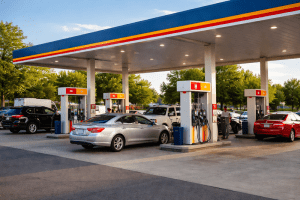
In American politics, few issues are as easy to weaponize during election cycles as the price of gasoline. Every driver in the country sees the price displayed on large signs along the road, making it one of the most visible economic indicators in daily life.
Because of this visibility, political campaigns often attempt to frame rising fuel costs as evidence of policy failure. Recently, some far-left Democrats have attempted to use the current increase in gasoline prices as a tactic to sway voters by focusing public frustration on the cost at the pump.
This strategy relies on a simple political formula: connect rising gas prices to political leadership and suggest that those in power are responsible for the pain Americans feel when filling their tanks. While the argument may sound persuasive on the surface, it ignores the broader international events driving the current increase in fuel costs.
The most immediate cause of the current rise in gasoline prices is the conflict involving Iran and the resulting instability in global oil markets. When tensions escalate in the Middle East, energy markets react quickly. Oil supply routes become uncertain, traders anticipate potential shortages, and prices rise accordingly. Because gasoline prices in the United States are tied directly to global crude oil markets, disruptions in that supply chain can quickly lead to higher prices at American gas stations.
However, history shows that these types of spikes are usually temporary. Geopolitical conflicts frequently cause short-term volatility in energy markets, but once stability returns and supply routes reopen, prices often move back toward normal levels. The current increase in gasoline prices is largely tied to the fighting and the uncertainty surrounding oil shipments, not a permanent shift in domestic energy production or supply.
More importantly, focusing solely on gasoline prices risks ignoring the much larger national security issue that prompted the conflict in the first place. For years, intelligence analysts and international observers have warned about Iran’s accelerating nuclear program. Recent reports suggested that Iran had advanced its uranium enrichment capabilities to the point where it could potentially produce weapons-grade nuclear material for a nuclear weapon in as little as 10 to 14 days. This so-called “breakout time” represents the window required to produce enough highly enriched uranium for a nuclear device once a political decision is made.
From a national security standpoint, that capability represents a far greater concern than a temporary rise in gasoline prices. A nuclear-armed Iran would fundamentally alter the balance of power in the Middle East. It could spark a regional nuclear arms race, embolden hostile actors in the region, and dramatically increase global instability.
When weighed against those risks, the temporary fluctuation in fuel prices becomes a relatively small economic inconvenience compared to the long-term consequences of nuclear proliferation.
At the same time, critics point out what they see as contradictions in the policies promoted by many Democratic leaders regarding energy. On his first day in office, President Joe Biden signed an executive order halting construction of the Keystone XL pipeline, a project intended to transport Canadian crude oil into the United States. Supporters of the project argued that expanding pipeline capacity would strengthen North American energy security and help stabilize fuel supplies.
In addition, environmental regulations and aggressive climate policies in certain states have had a noticeable impact on energy costs. California, for example, has some of the strictest fuel standards and environmental regulations in the country. While these policies are designed to reduce emissions and promote cleaner energy, they have also contributed to significantly higher gasoline prices in that state. At times, California drivers have paid nearly $6.00 per gallon for fuel, far above the national average.
Critics argue that these policies reveal a level of hypocrisy in political messaging. On one hand, some Democrat leaders promote aggressive restrictions on fossil fuel development, pipelines, and refining capacity. On the other hand, they highlight rising gasoline prices as a political talking point when those costs increase.
Ultimately, energy markets are influenced by many factors, including global conflicts, supply disruptions, environmental regulations, and long-term energy policy decisions. While rising gasoline prices certainly affect American families, they must be understood within the broader geopolitical and economic context.
In the current situation, the temporary increase in gasoline prices is largely a reflection of global instability. Meanwhile, the potential threat of a nuclear-capable Iran represents a far more serious issue with long-lasting implications for global security.
For voters trying to evaluate political arguments, it is important to look beyond the immediate frustration of higher fuel costs and consider the larger strategic realities shaping the world today.